Why ULTRAX
Because the aircraft tells us everything we need to know to keep it operational. We simply need to listen.

ULTRAX was built on a single observation: most sustainment challenges begin with incomplete understanding of aircraft condition, not with equipment failure.
The most complete evidence of condition is usually the first thing lost when action begins.
We preserve that evidence at its source and carry it into the next decision. That is what Condition-Based Intelligence™ does. That is what Listen. Know. Act. operationalizes. And it is why ULTRAX exists.
What follows is how we think about the work, what we will and will not pursue, and what that means for sustainment teams across H-60, S-70, CH-47, and adjacent rotary and fixed-wing fleets.
Five operating principles
Five principles shape how ULTRAX engages, what we build, and what we decline. The first three are the differentiation. The last two are how that differentiation shows up in practice.
1. We do not replace authority. We preserve it.
ULTRAX does not modify Technical Manuals, procedures, or the authority structures around them. Sustainment teams keep operating the way they operate. We make the evidence in front of those decisions clearer.
Authority, experience, and Technical Manuals remain unchanged. What improves is the quality of evidence available when the decision must be made.
2. We preserve aircraft evidence at its source.
The aircraft is the source of evidence. The most complete picture of condition exists before action begins to disturb it. ULTRAX connects, captures, and carries that evidence forward into the next decision, instead of letting it dissipate while replacement-first behavior takes over.
This is what Condition-Based Intelligence™ operationalizes through Listen. Know. Act.
3. We engage selectively: Mutual Value Discipline.
ULTRAX declines engagements where the operational need is not real, the value is not clear, or we cannot be meaningfully accountable for the outcome. Selectivity is a quality-protection mechanism, not a sales posture.
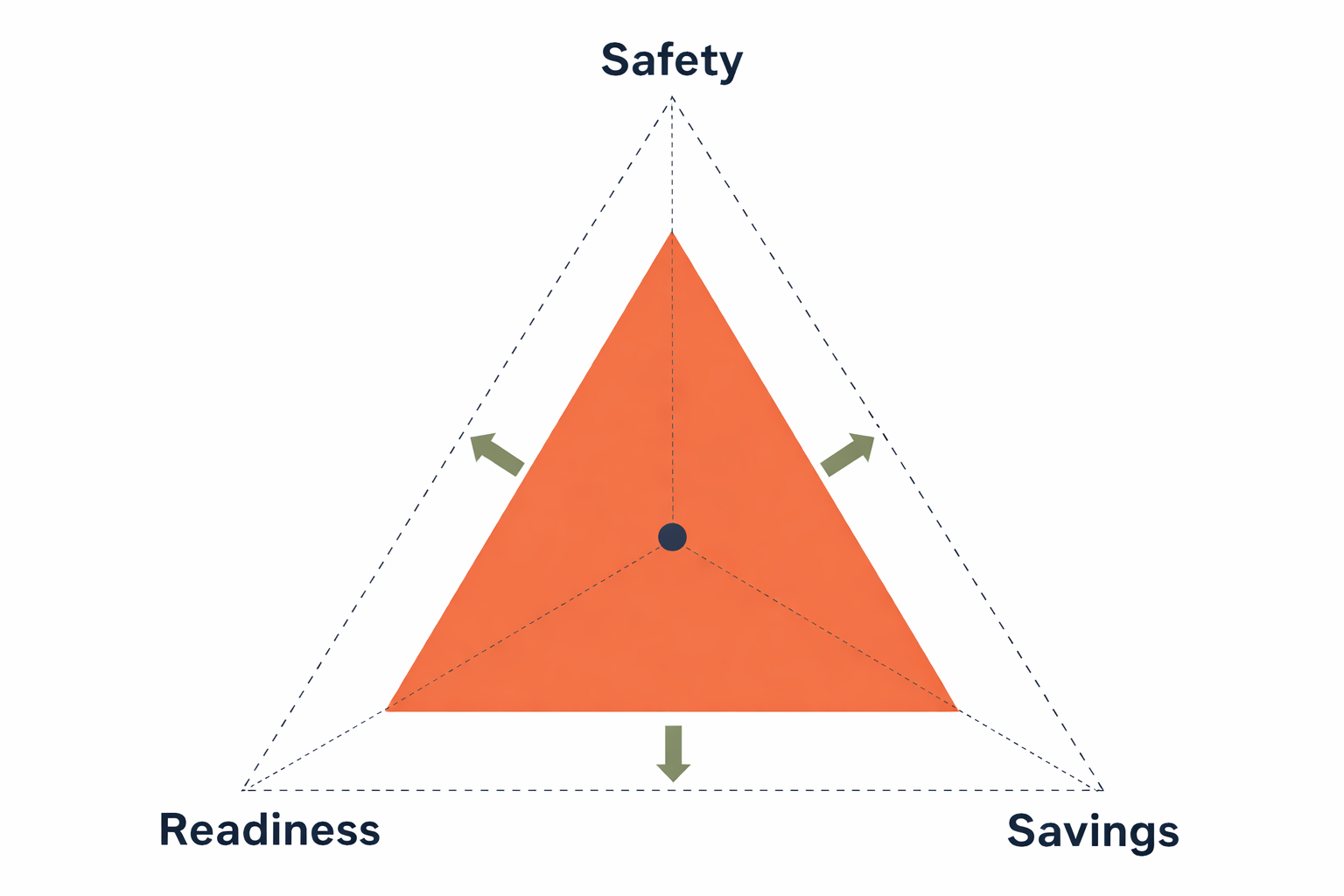
It protects sustainment teams from busy work and keeps our effort focused where decision quality can materially improve Safety, Readiness, and Savings outcomes.
4. We align the hangar and the boardroom.
Decisions made at the aircraft have enterprise consequences. ULTRAX provides a shared framework, through Condition-Based Intelligence™ and Net Gains, that lets those decisions be understood, supported, and defended across operational and executive boundaries.
5. We deliver services, not just systems.
ULTRAX delivers ongoing service programs (UxCare, UxAccess, Bench Avionics Testing, the UxSatellite regional network), not just products. Whether engagement is structured through acquisition, subscription, or access-based models, accountability for sustained outcomes continues through the life of the decision environment, not just the deployment date.
Mutual Value Discipline in practice
ULTRAX engages selectively as a discerning partner. Every potential engagement gets tested against four questions:
Is the operational need real?
We validate the actual condition behind the decision being made, not just the symptom presented.
Is the value clear?
We align with the customer on what “success” looks like operationally and economically before work begins.
Can we be meaningfully accountable?
We confirm the constraints, Technical Manuals, authority, timeline, and sustainment reality, that determine whether we can hold accountability for the outcome.
Is value symmetric?
We assess whether the value to the customer and the value to ULTRAX align across the life of the engagement, not just the transaction.
What we do when value symmetry isn’t there
When an engagement does not meet the standard, we say so early, so customer teams can redirect effort confidently and we can focus where decision quality can materially improve Safety, Readiness, and Savings outcomes. Declining is not a sales-cycle posture. It is a quality-protection mechanism that protects both sides from work that will not produce the outcome either party needs.
What this means for the customer
Sustainment teams get an engagement model where the same principles that stabilize maintenance and sustainment decisions at the aircraft level also stabilize the working relationship around them. Maintainers experience reduced ambiguity at the aircraft. Managers see improved predictability across schedules and inventory. Executives see Net Gains, Safety, Readiness, and Savings, that align across operational and executive boundaries rather than drifting into silos.
Where this shows up across the work
The principles above land differently depending on the work in front of you. Three common starting points:
- No Fault Found events: Where Mutual Value Discipline and authority preservation meet the most frustrating sustainment problem. See H-60 NFF →
- Return-to-service verification: Where preserving evidence at the source produces the most operational lift. See Bench Avionics Testing →
- Platform-specific sustainment: Where the five principles get expressed across H-60, S-70, CH-47, and adjacent fleets. See Solutions by Platform →
Operational presence
ULTRAX operates from Lee’s Summit, Missouri, and supports international programs through the UxSatellite network of authorized regional service partners.
Global footprint
ULTRAX technology is deployed across every continent and dozens of countries that operate H-60, S-70, and CH-47 variants.
The installed base spans direct military operators, foreign military sales programs, partner-operated fleets, and demilitarized civilian operators across multiple continents. International delivery runs through the UxSatellite network of authorized regional service partners.
Why this matters
Global deployment requires sustainment discipline. The five principles above are not US-centric. They are not language that softens for international contexts. The same authority preservation that holds on a US Army hangar floor holds on a partner-operated fleet across the world. The same Mutual Value Discipline that determines whether ULTRAX takes on US program work determines whether ULTRAX takes on international work. ULTRAX brings the same standards, the same evidence preservation discipline, and the same selective engagement model to every operator, wherever the aircraft fly.