
Test Flight in the Hangar
Preserve the connected state before action disturbs the evidence.
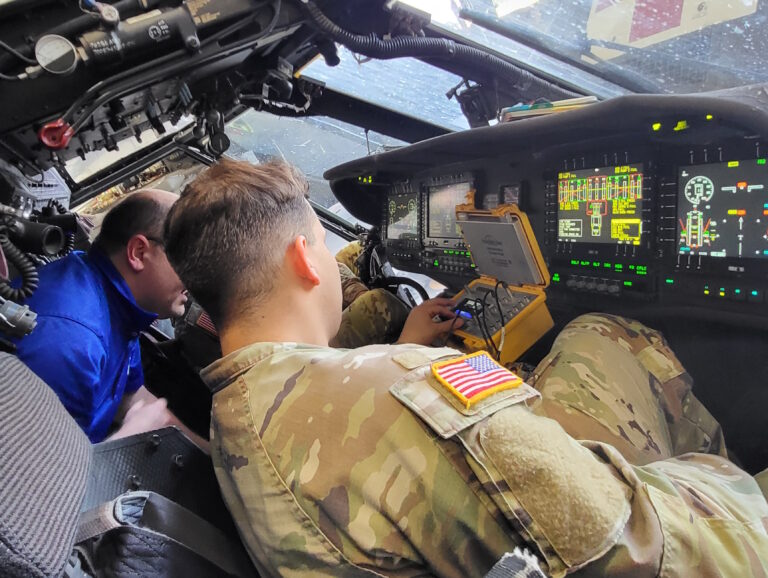

In-hangar test-flight methods preserve connected aircraft state so teams can verify condition before swaps, removals, or disconnections reduce the decision context.
Some of the most useful states of condition exist before the aircraft is disturbed. While systems remain fully connected, their behavior still reflects the aircraft as a whole rather than a collection of disconnected parts.
In-hangar test flight is a disciplined way to preserve and verify that connected state before swaps, removals, or disconnections reduce the context available to the next action.
It allows maintainers to create a weight-off-wheels test-flight condition on the ground without running engines, adding avoidable safety risk, or consuming maintenance time and resources on the wrong next move.
Why it matters.
Many maintenance decisions are made after the connected state has already been disturbed. At that point, teams may still have data, but they have less of the original condition context that gave the behavior meaning.
When wires are disconnected, LRUs are removed, or subsystems are separated too early, part of the most decision-useful state may already be gone. ULTRAX reduces that loss by helping teams verify aircraft condition earlier, before precautionary actions create more uncertainty than they remove.
What changes.
With in-hangar test flight methods and related verification workflows, teams can preserve the connected state before action changes it, separate engine from airframe with more confidence, and move toward targeted action sooner and with less compromise.
The goal is not more activity. The goal is better action, sooner.
More exact than swapping first.
If a team can verify state while the aircraft remains more complete, identify the actual problem path, and act in less time than it takes to swap parts defensively, then it takes less time to be exact than to make a compromised guess.
That is where ULTRAX changes the maintenance equation: not by replacing Technical Manuals or authority, but by improving the condition context available before action is taken.
How this connects to bench-level avionics connection.
Preserving state early improves what happens next, whether the next step is continued troubleshooting, targeted removal, engine-versus-airframe separation, or bench-level avionics connection through supported SCATS domains and Bench Avionics Testing.
On-wing truth preservation and bench-level avionics connection do not compete. They reinforce each other when the connected state is preserved before the aircraft is unnecessarily disturbed.
Engine-indication applications.
In-hangar test flight methods also connect directly to engine-indication and engine-separation workflows on on-wing UxValidator paths. Relevant configurations include Engine Indications to Cockpit for firewall-forward engine-versus-airframe separation and in-hangar test-flight workflows across T70X, S-70i/M, and Navy / USCG CSIE variants, EICAS for DCU-forward indication paths, and IDS where integrated engine-related indications still need to be interpreted in context.