Engine Indications to Cockpit
Firewall-forward engine-indication connection for separating engine from airframe and supporting in-hangar test-flight workflows before uncertainty drives action.
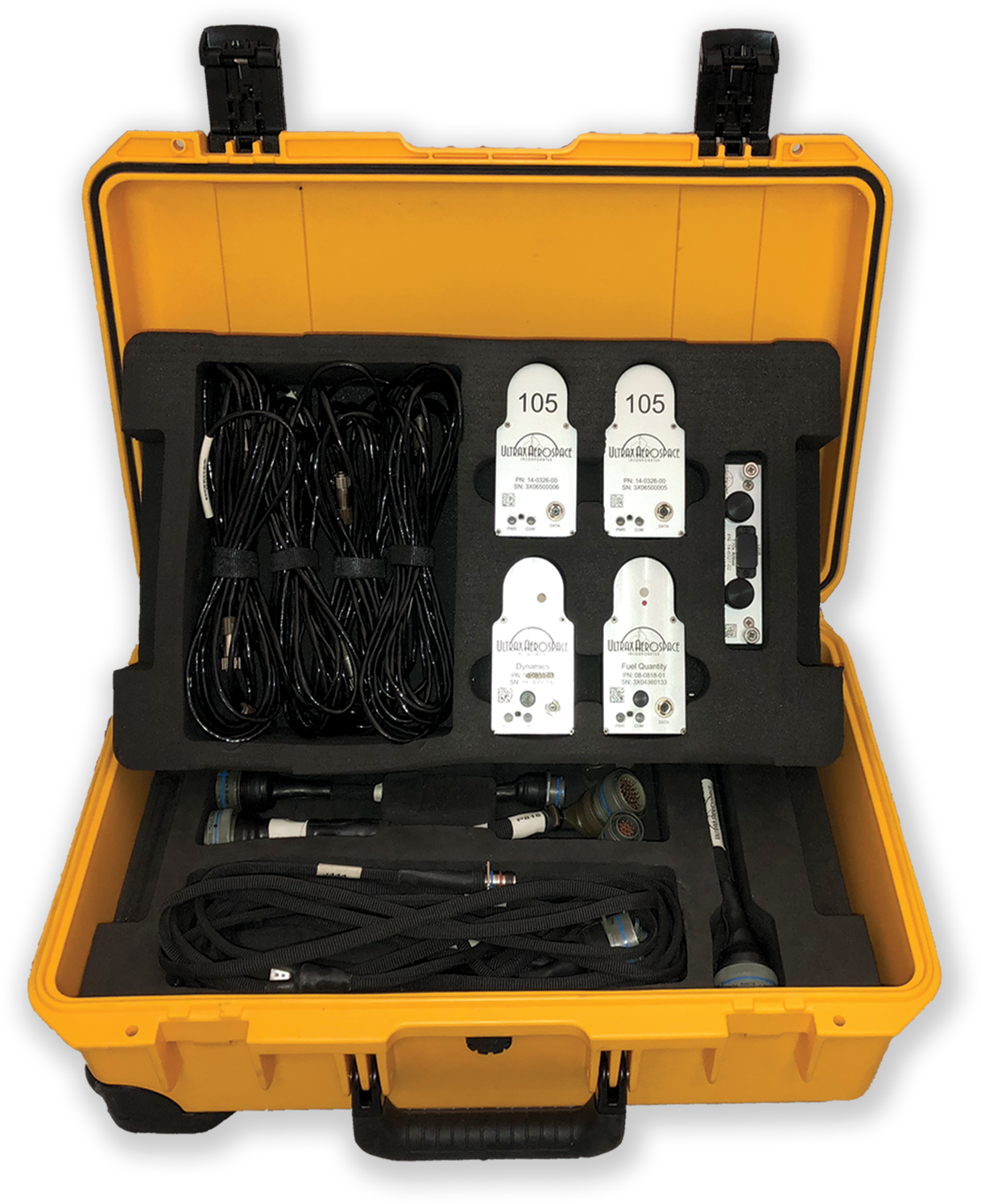

Firewall-forward connection preserves the signal path from engine to cockpit so teams can verify condition before swaps, removals, or defensive isolation reduce the decision context.
Engine Indications to Cockpit is the UxValidator™ configuration family for observing engine-related indications from the firewall to the cockpit. It preserves a firewall-forward connection point so engine-indication behavior can be interpreted before troubleshooting fragments the signal path.
This family is broader than any single product name. It includes T70X configurations, the S-70i/M Engine Indications Test Set, and the Navy / Coast Guard CSIE variant, each applying the same engine-indications-to-cockpit logic inside its own service environment.
This family operates in conjunction with the UxValidator Series platform and is not a stand-alone solution.
By connecting firewall-forward and carrying indications through to the cockpit, this family helps teams separate engine from airframe earlier, preserve condition evidence longer, and avoid compensating actions driven by incomplete signal-path understanding.
That same connection logic supports in-hangar and weight-off-wheels test-flight workflows on the ground, where teams need engine-related indications to remain interpretable without prematurely disturbing the aircraft.
Anchor the signal path where engine-versus-airframe ambiguity first appears.
ULTRAX intentionally anchors this family at the engine firewall because that is where engine-related ambiguity first enters airframe decision-making. When the connection starts there, maintainers can preserve more of the true indication path and bound the troubleshooting domain sooner.
That is different from DCU-forward or cockpit-only indication paths. Those configurations still matter, but they do not preserve the same firewall-to-cockpit continuity when the task is to separate engine from airframe or verify engine-related behavior during an in-hangar test flight.
This is not a claim about display visibility. It is a claim about where truth is anchored, how much of the indication path remains observable, and how early teams can move toward targeted action.
T70X, S-70i/M, and CSIE
T70X Engine Test Set names the Army and Air Force engine-indications configurations currently fielded through the UxValidator platform.
S-70i/M Engine Indications Test Set is the customer-facing name for PN 18-2120-00 within the same family, applied in S-70i/M environments.
Maritime Cockpit Systems Indications Emulator (CSIE) is the Navy / Coast Guard variant in the same engine-indications-to-cockpit family. It applies the same firewall-forward logic in maritime and service-specific engine-indication workflows.
Different product names, same underlying objective: preserve the signal path long enough to separate engine from airframe and support more exact next actions.
Adjacent but not identical paths
EICAS / CEFS remains the DCU-forward path for the aircraft where that connection point is appropriate.
IDS remains the cockpit-indication path for integrated display interpretation where engine-related indications still need to be read in context.
Those configurations complement this family, but they do not replace the firewall-forward engine-indications role when the problem is engine-versus-airframe separation.
Weight-off-wheels verification without losing the signal path
Engine Indications to Cockpit configurations are part of the same logic behind ULTRAX in-hangar test-flight workflows. When weight-off-wheels conditions are created on the ground, these paths help preserve engine-related indications in a form that remains useful for interpretation before unnecessary removals or disconnections reduce what the aircraft can still say.