
Maritime Cockpit Systems Indications Emulator (CSIE)
A Navy and Coast Guard variant within the ULTRAX engine-indications-to-cockpit family for firewall-forward engine-versus-airframe separation on current maritime H-60 variants.
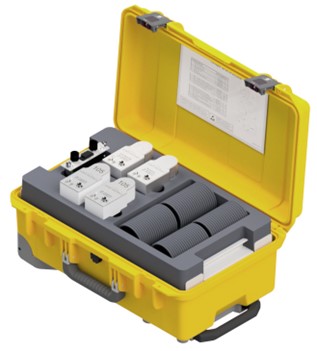
The Maritime Cockpit Systems Indications Emulator (CSIE), PN 23-0230-00, is the Navy and Coast Guard variant within the broader Engine Indications to Cockpit family. It extends UxValidator™ Series II into maritime engine-indication domains so teams can preserve firewall-forward connection and separate engine-related behavior from airframe effects before uncertainty drives the next move.
This configuration operates in conjunction with the UxValidator Series II platform and is not a standalone solution.
CSIE is the maritime customer-facing name for this technology in the latest H-60 variants of the U.S. Coast Guard and Navy. It preserves the same engine-indications-to-cockpit logic inside a maritime service environment where engine-related indications still need to remain interpretable before removals, swaps, or defensive isolation reduce what the aircraft can still say.
Earlier internal and business-development material may reference this variant as MEITS, but CSIE is the public-facing name used on this site.
- Listen: disciplined observation of engine indication behavior from sensor to indication
- Know: preserves comparable context across runs, tasks, and maintenance events
Simulate the signal, observe the indication, interpret the result.
The Maritime Cockpit Systems Indications Emulator (CSIE) enables the operator to provide simulated signals to SDCs or DCUs, then monitor the resulting engine instrument indications. Based on the stimulus provided and the outputs observed, the operator can determine whether the instrument displays are working properly from sensor to indication.
CSIE and the Series II UxValidator Set work together as a coordinated system:
- Using the BrainPak encoder knobs, the operator selects the task to be accomplished.
- The BrainPak transmits commands through the UxValidator and out the high-speed data cables to the pods.
- The pods perform those commands to simulate a specific input to the SDCs or DCUs.
- The instrument displays respond to the stimuli.
- The operator views the results and directs the next step.
The logic is the same one that defines the entire engine-indications-to-cockpit family: preserve the signal path long enough to determine whether the indication problem is actually in the display chain, elsewhere on the aircraft, or in the next decision being considered.
- Latest H-60 variants of the U.S. Navy
- Latest H-60 variants of the U.S. Coast Guard
- Maritime engine-indication domains where firewall-forward engine-versus-airframe separation is required
- 23-0230-00: Maritime Cockpit Systems Indications Emulator (CSIE)
For manual revision, service-pack, or current applicability details, coordinate directly with ULTRAX.
CSIE is the maritime variant in the same family as T70X and the S-70i/M Engine Indications Test Set. The product naming changes by service environment, but the underlying objective does not: preserve the firewall-forward signal path so teams can separate engine from airframe earlier and support more exact next actions, including in-hangar test-flight workflows.